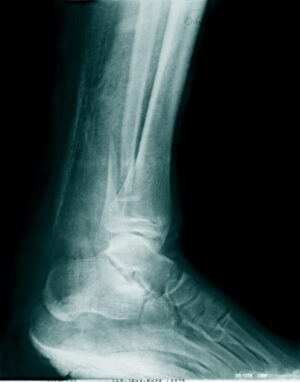
 Scientists out of China claim to have developed a medical grade bone glue that can treat fractured bone fragments within as little as three minutes, according to information from Zhejiang Online.
Bone cement and bone adhesives are commonly used during fracture repair to help hold bone fragments in place so that they can naturally fuse together throughout the healing process. However, bone glue is oftentimes paired with the implementation of surgical hardware, to further stabilize the fracture site and prevent bone shifting. Researchers say their new bone glue may be so effective that hardware insertion isn’t needed for many fractures.
New Bone Glue
The bone glue, dubbed “Bone 02,” was unveiled by a research team in East China’s Zhejiang Province last week. Lin Xianfeng, research leader and associate chief orthopaedic surgeon at Sir Run Run Shaw Hospital, said the inspiration for the product came from observing oysters clinging firmly to a bridge underwater. He said the adhesive can fix an injury within two or three minutes, even in a blood-rich environment. Moreover, the bone glue can be naturally absorbed by the body as healing progresses, meaning no subsequent operation to remove the adhesive is required.
According to reports, the bone glue has tested well when it comes to both safety and effectiveness, and has been tested on over 150 patients. Additionally, researchers stated that the glued bones showed a maximum force bonding of over 400 pounds, a shear strength of about 0.5 MPa, and a compressive strength of around 10 MPa. While those measurements may not mean much on their own, researchers say that it means the glue has the potential to replace traditional metal implants in fixation operations. Widespread adoption also has the potential to reduce the risk of hardware reaction or infections.
Bone cement is commonly used during operations, but none of these bone cements have adhesive properties, like this research team is claiming. Should their product prove legitimate, it could greatly improve how certain fracture procedures are performed. Even if the results are a little overblown, it seems likely that the product will act as a springboard for further innovation, pushing us to find new ways to improve on steadfast surgical procedures and techniques. We’ll keep an eye on this product and future studies to see how it evolves over time.
For more information, reach out to Dr. Silverman by filling out this contact form.