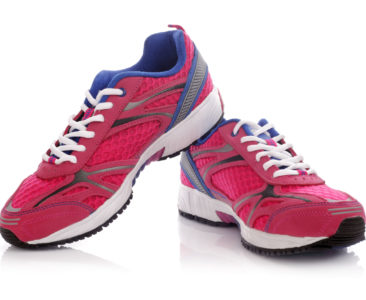
 They say that what you don’t know can’t hurt you, but that’s not exactly true when it comes to your feet. If you don’t know how to pick out the right shoes for your specific foot shape, you could be unknowingly putting your foot at a heightened risk for injury. In today’s blog, we take a closer look at five common mistakes people make when picking out a pair of shoes they’ll wear with great frequency.
Avoid These Five Mistakes When Buying Shoes
Let’s look at some common mistakes people make when purchasing new shoes, and some ways to avoid these issues.
1. Buying The Wrong Size – You’d think it would be easy to find the right sized shoe, but more people mess it up than you realize. Some estimates suggest that 3 in 5 people wear the wrong sized shoes. Some people like a snug shoe, but if it’s too tight or narrow, it can lead to problems like bunions, hammertoes and ingrown toenails. Others buy a shoe with too much room up front, assuming they’ll grow into the shoe, but that can lead to inadequate support or increase your risk of sheering and blisters. Consider having your shoe professionally fitted every time you buy a pair, because a size 11 shoe in one brand won’t fit exactly the same as a size 11 shoe in another brand.
2. Buying Shoes Online – Many people love the convenience of buying shoes online and having them delivered to their home, but that can be problematic too. Mainly, it’s because you never truly know how a shoe fits until you try it on your foot. It’s easy to put a shoe back on the shelf in the store if it’s not perfect, but many people won’t go through the hassle of returning an ill-fitting shoe that’s been delivered to their home if it’s “good enough.” Don’t settle for good enough when it comes to your shoes, and you can avoid this by buying your shoes in person.
3. Not Considering Your Arch – Finding a shoe that fits correctly isn’t just about finding one that works lengthwise. You need to find a shoe that fits all sides of your feet, including your arch. The specific shape of the shoe will need to incorporate whether you have flat feet, high arches or fall somewhere in between. A shoe specialist can help you find a shoe that contours to your arch’s specific shape so that your midfoot is supported.
4. Narrow Toe Box – You’re probably aware that heels can cause problems for your feet if worn in excess, but most people aren’t in heels for the majority of the day. However, there’s another shoe design that can cause it’s own share of foot problems, and it’s pretty common in an office setting. The sleek and narrow dress shoe and the pointed flat can force your toes out of a natural alignment. This pressure on the sides of your toe box can greatly increase your risk of bunions, crossover toe and toe joint dysfunction. Seek everyday shoes with a wider toe box.
5. Heel Support – Finally, you want to make sure that you heel is well-supported in a new shoe. For most people, their heel is the first part of the foot that strikes the ground when they are walking, so the heel area needs to be designed with shock absorption in mind. Also, you’ll want to ensure that your heel is secure and not sliding around at the back of the foot, as this can predispose you to ankle sprains if the back of your foot isn’t very stable. Any new shoe you purchase should provide stability and support to the heel area.
Keep these tips in mind, and never be afraid to reach out to a professional when buying a new pair of shoes! For more information, click around on our blog or reach out to Dr. Silverman today.