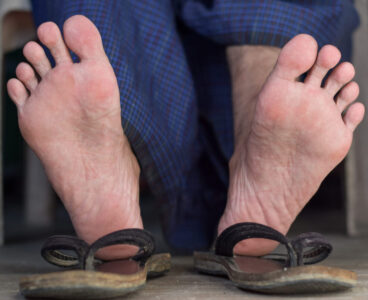
Your feet are quite spectacular. Comprised of 26 bones, 33 joints, over 100 muscles, tendons and ligaments and 200,000 nerve endings, each foot is an incredibly complex structure that is designed to absorb stress, stabilize our bodies and help us navigate the world around us. However, many people don’t pay their feet a second thought, and that could be killing them.
Literally.
Your Feet And Your Lifespan
How you care for your feet can certainly impact your lifespan, and that doesn’t mean that you should always pamper and protect of your feet. In fact, the opposite might be true if you hope to stay healthy as you get older.
You want to challenge your feet and put them in a position to stay strong and healthy, and modern conveniences may be making that a little more challenging. As we’ve mentioned on the blog in the past, we don’t come out of the womb with shoes on, and our ancestors weren’t lacing up their Nikes when they went out in search of food. Sure, shoes and orthotic inserts can help protect our feet from rocky terrain, but they can also serve to weaken our feet.
For example, overly cushioned shoes can cause key muscle groups in your feet to atrophy. Narrow or pointed shoes can change our natural ability to remain balanced on our feet. Certain orthotics can serve to weaken a person’s arch, as they end up being too protective of the foot. All of these issues can impact our foot’s natural shape and strength, which inhibits its ability to perform daily tasks, like remaining balanced.
Here’s where the connection to foot health and lifespan collide. Weak foot strength and worse balance is connected to a higher likelihood of falls. Not surprisingly, falls are the leading cause of injury-related death in older adults, contributing to over 38,000 deaths per year in the US alone. Weaker feet lead to a greater risk of falls, and falls are a leading cause of injury and death in older adults!
The good news is that it doesn’t take much to improve your foot strength. A few foot-focused exercises, balance training programs or simply walking around on your bare feet or in minimalist shoes can help you develop stronger muscles and better balance. Ditch the overly cushioned shoes when you’re at home, and skip the narrow-toed high heels at the office. Challenge your feet to feel the world around them and become stronger, and they’ll be better able to keep you upright later in life!
Dr. Silverman Comments
I’ve been teaching this concept at my clinic for two decades now. Overly protective shoes and cushioned inserts can end up doing more harm than good to your feet by weakening them. Considering the fact that our bodies naturally get a bit weaker as we age, why help the process along by wearing the wrong shoes or inserts?
That’s not to say shoes and orthotic inserts are always problematic, but you’ll want to connect with an orthopaedic specialist and ensure you are using a quality shoe or device and you understand what you need to do to offset some of the potential side effects of these assistive devices. We’ll happily be your guide and ensure the devices you believe are protecting your feet aren’t actually increasing your risk of a traumatic fall or an early death.
For more information about improving your foot and ankle health, reach out to Dr. Silverman by clicking here.