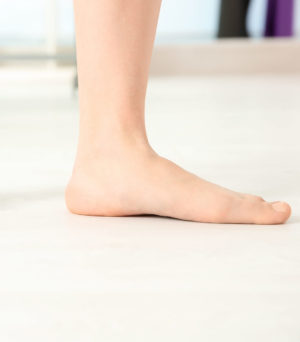
 Feet come in all different shapes and sizes, but ideally your foot will have a bit of a natural arch. This arch helps to ensure your body weight is distributed appropriately across your foot so that certain structures aren’t overloaded.
Due to genetics, trauma over the years and the natural aging process, your foot arch can collapse a bit, leading to a host of uncomfortable symptoms as your foot adjusts to new stress patterns. Common symptoms include pain, discomfort, soreness, swelling and numbness, but these stress pattern changes can also lead to related issues if they go untreated for long enough. For example, flat foot can increase your risk of knee pain, hip pain, bunions and hammertoes, so make sure you treat your symptomatic flat feet.
Treating Flat Foot
You’re not going to be able to naturally restore a healthy foot arch, but there are plenty of things you can do to provide a more ideal environment for your foot so that foot shape changes don’t overload certain areas with stress. Surgery can help to reshape a lost arch, but oftentimes symptom relief can be found through conservative means. Here are five conservative treatment tips we recommend:
1. Shoe Changes – Make sure the shoes you wear are designed with your foot shape in mind. There are shoes that are specifically designed to provide extra support to individuals with flat feet. Connect with a foot specialist or a shoe fitter to find a pair of shoes that offers a little extra protection for your flat feet.
2. Orthotic Inserts – If you want to keep wearing your normal shoes but are still looking for ways to protect and cushion your flat feet, consider an orthotic insert. Generic and custom orthotic inserts can help to redistribute how stress is displaced along your foot, getting it back to a more ideal distribution pattern. There are plenty of generic inserts that are designed to help treat flat feet, but you can really make sure your inserts are right for you by connecting with a specialist to have a custom pair of inserts tailored to your specific foot shape.
3. Weight Loss – Another helpful way to limit overloading your feet with stress when they don’t have the perfect shape is to lose a little weight. Your feet are tasked with managing the stress of your body weight, so the less you weigh, the less stress they’ll be under. Losing just a couple of pounds can take a great burden off your feet, so exercise regularly and work to consume a healthy diet to aid in weight loss.
4. Physical Therapy – You can also help to protect your feet from stress by working to make them a bit stronger. Physical therapy exercises can strengthen key muscle groups in the foot so that your entire foot complex is better prepared to handle shifting stress patterns as you move. PT will not restore your arch to a perfect shape, but it can help to strengthen muscles in the area that help it function properly.
5. Bracing – Finally, a brace or similar ankle support can be a helpful addition when you’re moving or exercising. As we’ve mentioned above, arch changes can ramp up the stress on soft tissues and ligaments in the area. Over time, this prolonged stress can weaken these structures, leaving them prone to injury or tears. A brace can provide some additional support to these weakened areas so that they are not at an elevated risk for injury.
Many patients with flat feet will pursue a combination of the treatments listed above in order to achieve the best results. To learn which techniques may be best for you and your foot arch, reach out to Dr. Silverman by filling out this contact form.