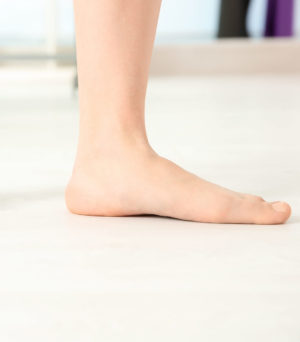
 Our feet tend to have a bit of a natural arch. This foot arch helps to ensure stress is dispersed ideally across the foot, but due to wear and tear over the years and the natural aging process, some people see this arch collapse. When this happens and the entire base of the foot lies in contact with the ground, it is known as flatfoot. The early stages of the condition are known as flexible flatfoot and oftentimes it doesn’t present with symptoms, but eventually the midfoot can become more rigid, which is aptly known as rigid flatfoot.
Rigid flatfoot can lead to pain, discomfort, swelling, balance issues and decreased foot mobility, and although conservative treatments are available, if the condition is already in the rigid form, oftentimes more invasive treatments are required. This can lead to the need for flatfoot reconstruction surgery.
Who Could Benefit From Flatfoot Reconstruction Surgery?
There are a few different groups of individuals who could benefit from flatfoot reconstruction surgery. As we noted above, those with a fallen arch who are experiencing uncomfortable or worsening symptoms may be an ideal candidate for the procedure. Other individuals who may benefit from flatfoot reconstruction surgery include:
- Patients with posterior tibial tendon disorder (tendon weakening that leads to arch collapse)
- Patients with significant arthritis damage or deterioration
- Patients whose arch collapse is causing an abnormal gait or causing problems for upline joints, like the knee or hip
- Patients who have not responded to conservative treatment
Types Of Flatfoot Reconstruction Surgery
The arch and the foot itself can be reshaped in a few different ways based on a patient’s individual needs. Here’s a look at some of the ways a flatfoot condition may be corrected with surgery.
Tendon Repair/Tendon Transfer – For patients with a damaged posterior tibial tendon, the surgeon works to address the damage or transfer healthy tendon tissue to the area to restore shape and function to the foot arch.
Osteotomy – An osteotomy can be beneficial for patients whose arch issue is tied to bone shifting or misalignment. The surgery involves cutting or reshaping certain bones in the foot to correct the misalignment and restore the foot arch.
Fusion – For patients with severe arthritis or a very rigid case of flatfoot, a surgeon may work to stabilize joints in the feet by fusing them together and working to limit symptoms by preventing the continued progression of arthritis.
Flatfoot Surgery Recovery
Your individual recovery timeline will differ slightly, but a general recovery timeline for flatfoot surgery looks something like this:
First 6-8 Weeks – The foot will be immobilized in a cast or boot, and the patient will remain non-weight bearing while the early stages of healing occur.
Weeks 6-12 – Once you have been cleared by your surgeon, you’ll progress to partial weight bearing with the help of a walking boot or crutches. Physical therapy to improve strength, flexibility and function will also begin and continue throughout this stage.
Month 3-6 – Most patients are cleared to return to normal daily activities by the 3-6 month mark, although those who work strenuous manual labor jobs or athletes may need upwards of one year to make a complete recovery.
For more information, reach out to Dr. Silverman by filling out this contact form.