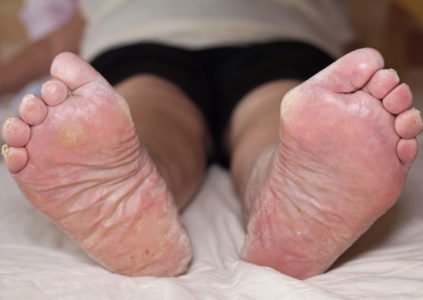
 You can tell a lot about your health by looking at your feet. Healthy feet can provide the foundation for a healthy body, while new symptoms in your feet can suggest that you may be dealing with an issue that warrants further attention.
In fact, there are a couple of symptoms that may develop in your feet that could indicate that you’re dealing with a problem with your thyroid gland, which is located in your neck. In today’s blog, we discuss three symptoms in your feet that could be indicative of a thyroid problem.
Foot Symptoms And Your Thyroid Gland
Your thyroid gland assists with a number of essential processes in the body. It’s main function if to produce hormones that help to regulate a number of key bodily processes. It produces hormones that assist with:
- Digestion and Metabolism
- Growth and Development
- Heart Rate
- Blood Pressure
- Muscle Function
- Bone Health
Due to the onset of different health conditions or a genetic predisposition, your thyroid gland may start overproducing or underproducing hormones that are necessary for these bodily functions. This hormone production destabilization can lead to a host of symptoms depending on which systems are impacted. You may experience symptoms including fatigue, rapid heart beat, muscle weakness, changes in appetite and more, and all of these factors can make life a little more uncomfortable.
Sometimes signs of a thyroid disorder also present in our feet. If you’re dealing with any of these three symptoms, there’s a possibility that the real issue is housed in your thyroid gland:
1. Cold Feet – Cold feet can be a sign of circulatory problems that could be caused by a few different potential issues, including an underperforming thyroid gland. An underactive thyroid can slow down your metabolism, in turn causing your body’s temperature to decrease, and this is oftentimes most noticeable in your extremities like your hands and feet.
2. Swollen Feet – Again, swollen feet can be caused by a few different health issues, so you’ll want to confirm what’s going on with the help of a physician. An underperforming thyroid can negatively impact how fluids are regulated in your body, leading to fluid retention, swelling and decreased circulation. This fluid retention may be most noticeable in your feet due in part to gravity and how fluid settles in our body when it can’t be removed as needed.
3. Dry, Cracked Feet – Your thyroid gland also produces hormones that help to keep your skin healthy. A thyroid disorder can decrease production of these key hormones, leading to dry, flaky and cracking skin.
If you’re dealing with any of these symptoms and have reason to believe they may be linked to a thyroid disorder, reach out to your foot specialist or your primary care provider. For more information about the link between thyroid issues and your feet, or for help overcoming a different foot problem, reach out to Dr. Silverman by filling out this contact form.