 The following is the final installment of our five-part series on why each of your toes may be in pain. You can learn more about why your big toe, second toe, third toe and fourth toe hurt by clicking the links to the blogs. Below, we take a closer look at what might be causing pain in your pinky toe.
Your pinky toe is typically the smallest toe on your foot, and while the bones that make up the digit are strong and small, the pinky is also less protected than other toes that fall in the middle of your foot. Let’s take a closer look at some of the issues that may be causing the discomfort you’re experiencing in your pinky toe.
Pinky Toe Pain
If you are dealing with pain or discomfort in your pinky toe, your foot specialist will work to confirm or rule out these common issues.
Bunionette – A bunionette is similar to a bunion that we talked about in part one with your big toe, except this smaller condition develops on your pinky. It occurs when the joint of your little toe becomes misshaped, causing the little toe to point inward and a small bump to form at the side of the base of the little toe. These are less serious than a bunion that develops at the joint of your big toe, but they shouldn’t be ignored either. Poor footwear is typically the cause of a bunionette, so switching to a roomier and more comfortable set of shoes is a must if a bunionette has begun to develop.
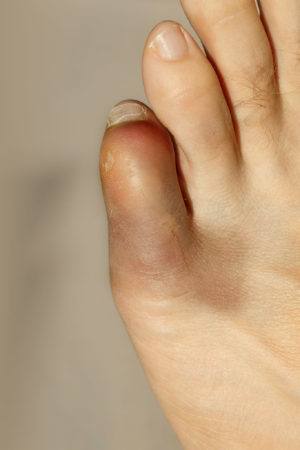
Bruises/Breaks – Stubbing your pinky toe or dropping something heavy on the little digit can lead to a bruised or fractured toe. Persistent pain is a fair indicator of whether or not the toe is bruised or broken, but X-rays can confirm the extent of the damage. In either case, expect the toe to be discolored and swollen, but know that the main course of treatment for both injuries are conservative measures like rest, icing and protecting it from additional stress.
Ingrown Toenail – An ingrown toenail is less common on the pinky toe, but because this nailbed can endure more direct pressure from ill-fitting shoes, and because the small nail can make it more difficult to trim it properly, they certainly can develop on your pinky toe. This can lead to red, swollen toes and discharge coming from the nailbed. Switching to a roomier shoe and properly caring for the ingrown toenail can help get everything back in order.
Stress Fracture – A stress fracture is similar to the break we discussed above, but it typically is the result of repetitive stress, whereas the above fracture was more likely the result of acute trauma on the toe. Dancers, athletes, runners or anyone who puts a lot of strain on their toes can be at risk of a stress fracture, especially if your feet are in overly tight or unsupportive shoes.
Corns/Calluses – Finally, your discomfort may also be the result of the formation of a corn or callus on your pinky toe. Corns and calluses can develop as a result of the stress the toe handles from movement and from the pressure of your shoe. The can cause the skin in the area to thicken and become sensitive or painful. Again, switching to a roomier shoe is a great option, as are custom orthotics which can change how stress is dispersed along your foot, taking pressure off the pinky toe.
If you need help figuring out why your pinky toe hurts, connect with a physician in your area or reach out to Dr. Silverman for more information!