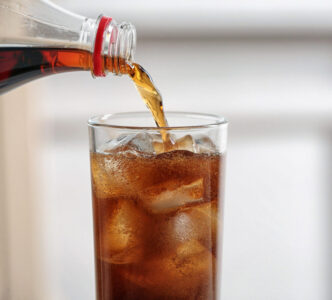
 If you’re looking for a “healthier” option than a sugary, high calorie soda, you may turn to a zero calorie diet soda. The assumption here is that “zero calorie” means “non-fattening,” but is that really the case? We take a closer look at a recent study and explore some interesting trends to destroy the idea that zero calorie soda helps people avoid weight gain.
Soda Study
A recent study gave 75 people three different drinks on separate occasions: plain water, water sweetened with regular sugar (sucrose) and water sweetened with an artificial sweetener (sucralose, in this case, Splenda). Then researchers took a brain scan to see what was happening in the hypothalamus, which is the region that controls hunger and appetite. They found that despite having zero calories, sucralose activated the hypothalamus more than sugar did, in turn making people significantly hungrier.
The theory here is that your brain detects sweetness an anticipates an incoming energy boost, but when no calories arrive, the appetite-regulating neurons in your brain shift into a “find food” mode, making your body feel hungrier so you satisfy this urge.
It’s kind of like walking by a pizza shop when you’re in between meals. You’re not hungry in the moment, but when you get a whiff of that melting cheese and fresh tomato sauce, your brain and body start to expect that those delicious smells will soon be entering your body in the form of a slice of pizza. You weren’t hungry, but your body caught a glimpse of what could be coming soon and began preparing for it, and now you’re stopping in for a slice. With diet soda, your body is expecting sugar in the form of energy, only to not be satisfied because the drink contains a zero-calorie artificial sweetener. Now your brain is ready for calories that haven’t come, and they signal to your body to make up for this in other ways. Now you’re hungrier and consuming calories in other ways, mitigating the weight loss potential of zero calorie drinks.
Dr. Silverman Comments
I find this fascinating. Conventional logic is that no calorie = non-fattening. Turns out that is wrong. But here is the correlational data that turns the conventional logic on its head. I ran a question through ChatGPT5.0, to simply graph diet soda consumption in US vs obesity rates. Here is the response and graphs. The graphs use the best public data that actually exists:
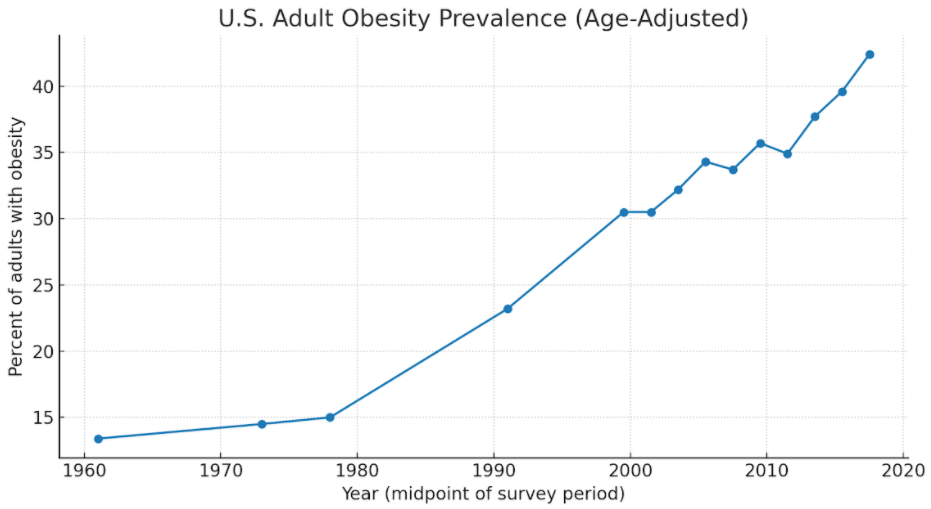
#1 shows U.S. adult obesity prevalence since the early 1960s (NHES/NHANES). (CDC)
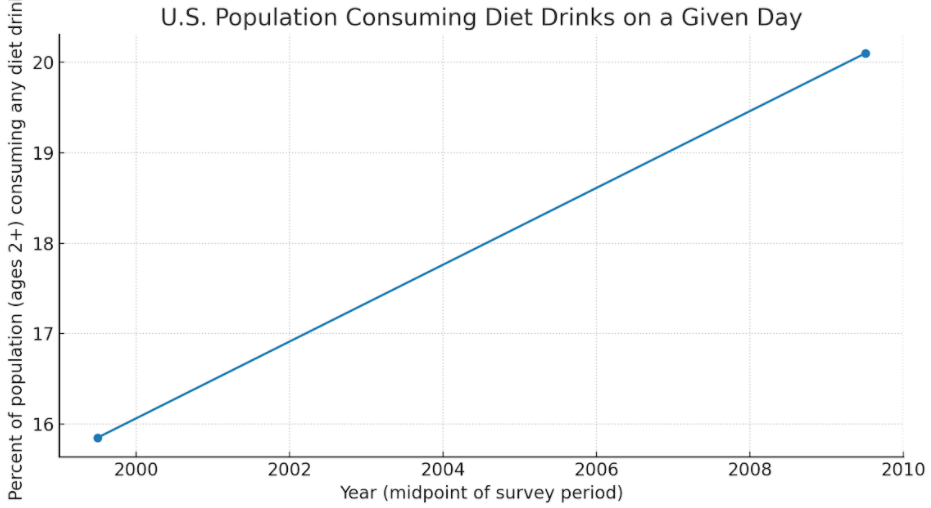
#2 shows a proxy for diet soda “sales”: The share of the U.S. population consuming any diet drink on a given day, which NHANES tracked from 1999–2010. The endpoints (≈15.9% → 20.1%) are derived from CDC’s sex-specific series (I averaged male & female). (CDC)
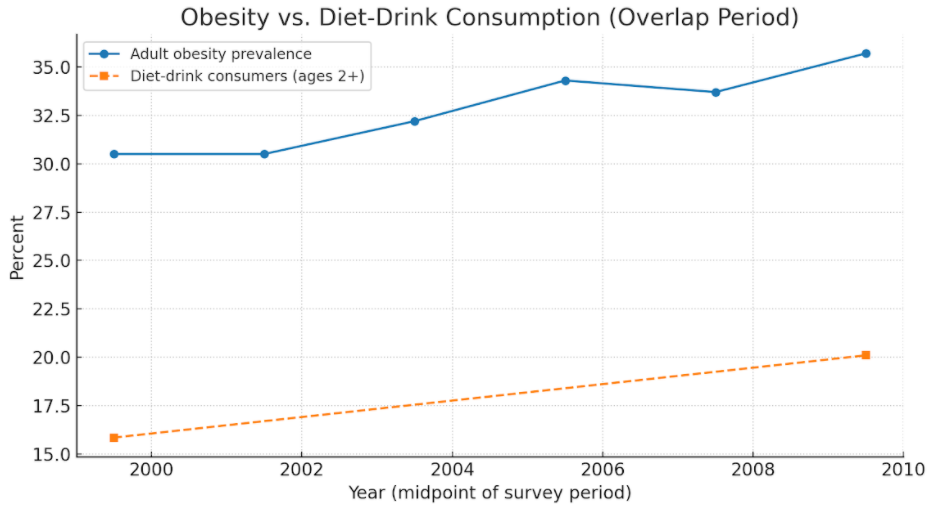
#3 overlays the 1999–2010 overlap so you can see both trends together.
It’s certainly not the only reason Americans are getting fatter, but given the data and the trends, it’s safe to say diet soda is certainly playing a role. Your body isn’t as able to properly handle artificial sweeteners compared to natural sucrose. Of course, water is a better option than both, but don’t assume that diet soda is always the healthier option, because the science says differently.