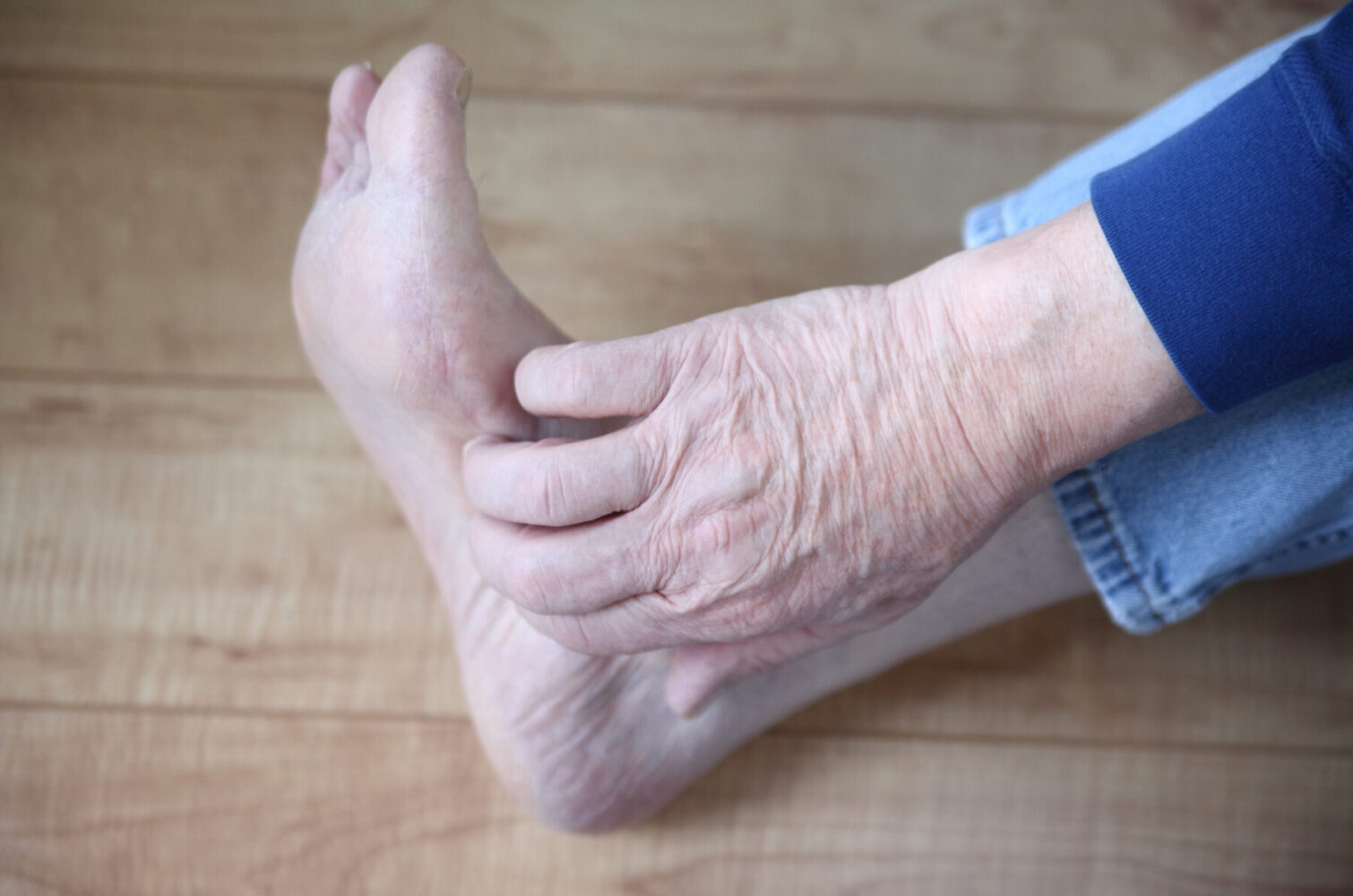
 Rheumatoid arthritis is an all too common affliction that can impact your life in a number of ways. It’s an autoimmune disorder that causes the body to mistakenly attack its own healthy tissues, oftentimes targeting a person’s joints. Some of the most common joints for RA to affect are in your hands, feet and ankles.
Getting your rheumatoid arthritis under control can help you live a more comfortable life, and that also means working to prevent some related conditions that can develop in your ankles and feet as a result of unchecked RA. In today’s blog, we spotlight four of those foot and ankle conditions that can develop as a direct result of rheumatoid arthritis so that you can act appropriately if you’ve been diagnosed with the autoimmune disorder.
Foot Conditions Caused By RA
When your body mistakenly attacks your joint, it can lead to soft tissue damage, prolonged inflammation, swelling and jointing shifting/dysfunction. Symptoms in the feet are quite common, as upwards of 90 percent of patients with RA report symptoms in their feet and ankles at some point in their life. Some of the most common conditions that rheumatoid arthritis can lead to in your ankles and feet include:
Bunions – As we’ve talked about at length on this blog, bunions are a foot issue caused by a shifting of the big toe joint. As the big toe shifts towards the other toes, the big toe joint begins to shift outwards, leading to a bony prominence on the side of your foot. Not only can this bump be painful, it can also make walking or wearing shoes difficult. Patients with RA are more prone to joint instability and shifting. It’s imperative to try and prevent and manage bunion formation, because the joint won’t shift back into a correct location without surgical correction.
Hammer Toes – Hammer toes, claw toes and mallet toes are three other types of toe deformities that are more common in patients battling rheumatoid arthritis. RA can damage the smaller joints in your toe, leading to soft tissue contraction and an abnormal bending of the toe at different joints. Again, this toe joint dysfunction can make it difficult to walk comfortably or wear certain types of shoes.
Foot Arch Collapse – Rheumatoid arthritis can end up weakening the posterior tibial tendon, which plays a pivotal role in your foot’s natural arch. When the tendon weakens, the foot arch is more prone to collapsing, which can change your foot shape and lead to issues as stress patterns shift within your feet and ankles. Our foot arches naturally help to provide optimal load disbursement, and when the arch collapses, overstress injuries can be more likely to occur in your feet.
Midfoot Instability – Finally, in more severe cases of RA, the joints in the midfoot can become affected. Over time, bones in the midfoot can become partially dislocated as a result of chronic stress and the effects of RA. This can lead to painful midfoot instability and related issues with balance and mobility.
If you’re dealing with rheumatoid arthritis, make it a point to take extra good care of your feet and consult with a specialist at the first sign of a potential issue. Early intervention is always helpful, but that’s especially true for patients with rheumatoid arthritis. For more information, reach out to Dr. Silverman by filling out this contact form.