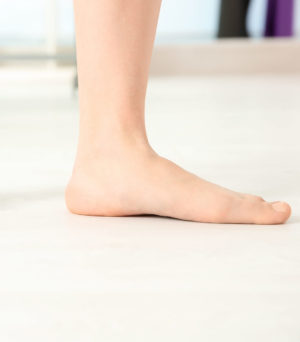
 To the untrained eye, flat feet and collapsed arches will look the same. Even to the trained eye, the foot shape looks quite familiar, but knowing the difference is important in the event that you begin to experience uncomfortable symptoms. In today’s blog, we take a closer look at the differences between flat feet and collapsed arches and the treatment options for both.
Collapsed Arches
Let’s begin by looking at collapsed arches, because this condition is typically more symptomatic than flat feet. Collapsed arches tend to be more of an issue for older adults who have put decades of stress on their feet. As a result of repetitive stress and injuries over the years, the strong support tissues that help make up your foot arch can weaken or become damaged, leading to a collapse of the natural arch. Oftentimes the problem is caused by weakening or damage to the posterior tibial tendon, so a collapsed arch may also be classified as posterior tibial tendon dysfunction.
Symptoms of a collapsed arch can include:
- Gradual loss of the foot arch
- Pain in the foot arch of alongside the inside of the ankle
- Foot or ankle swelling
- Overpronation
- Pain or discomfort when standing on tiptoes
Proactive treatment of collapsed arches is recommended, even if the condition isn’t overly painful at the outset. If the posterior tibial tendon gets weaker or suffers more damage, the arch can collapse further or symptoms can intensify, so focusing on restoring strength and function to this tendon and surrounding soft tissues is helpful. Oftentimes this is accomplished by switching to a more supportive shoe, wearing custom orthotic inserts, pursuing weeks of physical therapy, partaking in low impact exercises and striving to lose some weight to take stress off the feet.
Flat Feet
Flat feet, also known clinically as pes planus, is categorized by a low or nonexistent foot arch. Unlike the above condition, those with flat feet never really had much of an arch to begin with. The condition may be present since birth or may simply solidify as a teen or young adult’s foot grows into its final shape. In many younger patients, flat feet doesn’t present with any symptoms, but it can. Symptomatic cases of flat feet include:
- Foot fatigue after walking or standing
- Ankle joint discomfort as a result of altered lower body alignment
- Dull foot discomfort
Flat feet is less likely to be symptomatic than collapsed arches because there’s no damage or weakening of the supportive soft tissues in patients with flat feet, that’s simply how they were formed. However, this lack of an arch can lead to faster foot fatigue or discomfort in other joints as a result of alignment issues. If you think your lower body discomfort could be tied to your foot shape, talk to your doctor or a foot specialist. Odds are they’ll recommend a few common treatment options like switching to a shoe that is designed for individuals with flat feet, getting a custom orthotic insert for additional support, physical therapy and stretching exercises to strengthen supportive tissues in the foot and weight loss to take strain off the feet.
Pay attention to your arches, and be aware if your natural arch shape begins to change over time. Arch pain can make every step uncomfortable, and that’s no way to go through life. Let Dr. Silverman and the team at OrthoArizona help you find ways to support your arches and resolve symptoms. For more assistance, set up an appointmentwith his office or give them a call today at (602) 648-5444.