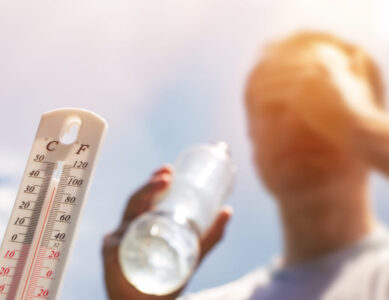
 New findings published in The Lancet Global Health suggest that rising global temperatures are making it more challenging and less safe for people to stay physically active.
Researchers believe these rising temperatures are making it more difficult for individuals in certain areas to safely exercise outdoors, which could potentially lead to increased inactivity, and there has been plenty of research on how sedentary lifestyles and health issues are related. Moreover, researchers believe that if climate change progresses, hotter conditions may only continue to discourage outdoor movement in many regions. This could put regular outdoor physical activity out of reach for millions of adults by 2050, resulting in about 500,000 more premature deaths and $2.5 billion in lost productivity annually, researchers claim.
The Downsides Of Inactivity
Physical inactivity has long been connected to a bevy of health issues, including but not limited to:
- Heart disease
- Diabetes
- Certain cancers
- Mental health disorders
Additionally, physical activity already contributes to about five percent of adult deaths globally, and roughly one-third of the world’s population does not meet recommended weekly exercise levels. That problem could worsen is the study’s findings continue.
For their research, the team explored data from 156 countries between 2000 and 2022 and used models to predict how increasing temperatures could impact physical activity by 2050. The findings show that hotter conditions are directly linked to reduced physical activity, particularly in areas where extreme heat is more frequent. The areas at greatest risk of being impacted by rising global temperatures are areas closer to the equator, including:
- Caribbean nations
- Eastern sub-Saharan Africa
- Equatorial Southeast Asia
- Central America
Researchers noted that many of the regions affected by heat also have limited access to cooling systems, flexible working conditions or safe indoor exercise spaces, which would make it more challenging for individuals to safely stay active in these regions when temperatures are at their worst. They want people to understand that exercise access and physical activity isn’t just a lifestyle choice, it’s a climate-sensitive issue.
“Because these exposures co-occur disproportionately in tropical low and middle income countries,” wrote the authors, “where air-conditioning penetration, shaded public infrastructure, and discretionary leisure time are scarce—the resulting burden is profoundly inequitable.”
There are many reasons why we should be focusing on climate change and making the world more habitable for future generations, and now we can add exercise access to the list. We are more fortunate here in the US compared to other nations closer to the equator when it comes to indoor exercise facilities and flexible working conditions that allow us to avoid working in extremely dangerous temperatures, but other nations don’t have those luxuries. We need to build a better tomorrow so that we can continue exercising today.
As always, if you need help overcoming a new or existing foot or ankle condition, connect with Dr. Silverman and his team today!