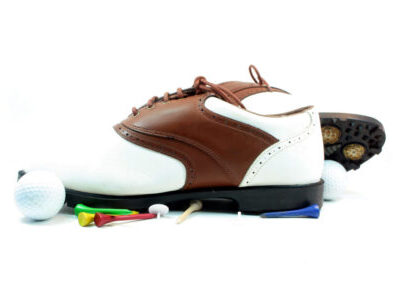
 Nothing ruins a round of golf faster than sore and achy feet before you head to the back nine. Even if you’re riding in a cart, you’ll still put a fair amount of steps on your feet and ask them to absorb different stress patterns during your swing, and if your feet aren’t in the right pair of shoes, pain can develop during your round. To keep your feet from bothering you during your next round of golf, we put together some orthopedic specialist-approved tips for buying the right golf shoes for your feet.
Preventing Foot Pain When Buying Golf Shoes
Here are some expert tips for picking out your next pair of golf shoes that will help decrease your likelihood of developing foot pain during your round.
1. Choose Comfort and Support Over Style – Comfort and support should be the two most important factors when it comes to choosing a golf shoe. You may like the look of a specific Callaway or Nike shoe, but if they are a little too tight or don’t contour to your foot’s specific shape, opt for a different pair that better cushions and supports your feet. You’re not going to care what your shoes look like if they are the reason your dogs are barking by the end of the round. Prioritize comfort and support.
2. Consider Orthotics – Even if your shoes are pretty comfortable, you may benefit from adding a generic or custom orthotic insert. These inserts can help disperse stress forces and ensure certain areas of your feet aren’t overloaded with stress, which can be helpful because of the shifting forces your feet experience each time you swing a club. If you have a specific foot issue, like high arches or heel pain, connect with a specialist who can help you find an orthotic designed to your individual needs.
3. Buy In Person In The Afternoon – It’s easier to ensure you’ve found a shoe that fits correctly if you buy them from a store where you can physically try them on before buying. Many people also find it helpful to go shoe shopping in the afternoon. Our feet tend to swell ever so slightly during the course of the day when we’re active and moving, which is also something you experience on the golf course. If you don’t account for this natural swelling, your shoes may end up too tight by the middle of your round. Buy shoes in person after you’ve been up and moving for a while.
4. Keep Them Dry – Store your shoes in an area where they can dry out after a round and remain dry until your next round. Wet, sweaty or moist shoes can be a breeding ground for bacteria that causes fungal infections, so shop for a breathable pair of shoes and help them stay dry between rounds. Keeping an extra pair of socks in your golf bag can also be helpful if you begin to sweat or your socks get damp.
5. Consider Spikes – Most golf shoes have spikes or some additional type of grip on the bottom of the shoe, but not all pairs will. Moreover, if you’re just using a tennis shoe or a running shoe as a golf shoe, you won’t have this extra grip on the bottom that provides additional stability during your swing. This grip keeps your foot from slipping or shifting during your swing, which can help prevent injuries. Find a shoe with a subtle but noticeable grip on the bottom to keep your feet in place during your swing.
Keep these tips in mind, and be sure to connect with a foot and ankle specialist if you’re noticing new or chronic foot discomfort during your next round of golf. For more information, or for help with a different foot issue, connect with Dr. Silverman and his team today!