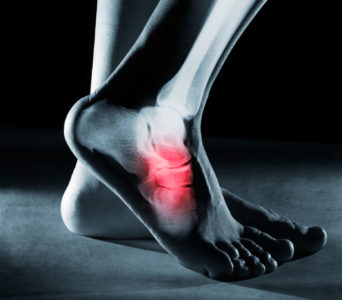
 You probably envision your bones as sturdy, unchanging internal support structures, but like almost anything in life, our bones will be impacted by the stress they experience as they develop and age. Recently, a study out of the University of Chicago took a closer look at how our bone shapes change depending on how we use them, and they discovered some fascinating differences between Indigenous people who went barefoot and modern Americans who typically wear shoes. We take a closer look at that study and how our bone structure is impacted by our daily choices in today’s blog.
Shoes And Our Bone Shape
The study, published in the Journal of Anatomy, took a closer look at the trabecular bone, which is a spongy latticework of tissue inside the ends of bones. This area provides structural support and shock absorption while keeping the skeleton lightweight. However, the new study found that it was not immune from stress, as it showed changes in response to physical forces like walking, running, jumping or climbing.
“You can think of it like the Eiffel Tower, where it has all these struts and lattices to provide a very rigid structure,” said Hanna Farell, PhD’24, who led the study. “But the trabeculae are also preferentially reoriented throughout life to continue to provide that same support as the individual faces loading from different behaviors.”
To better understand how bone is impacted by activity or lifestyle choices like wearing shoes or going barefoot, researchers used high-resolution micro-CT scanning to analyze bones from collections of skeletons. The first group consisted of 40 individuals who regularly wore shoes, while a second group included 13 skeletons of habitually unshod people from around the world provided by the Natural History Museum in London. Researchers focused on the talus bone, which is a central, weight-bearing bone in the ankle that connects the lower leg to the foot.
The team found that modern individuals had more trabecular bone in the back of the talus, suggesting that people wearing shoes tend to put more weight on the back of the bone, perhaps as a result of the higher ankle of the heel created by the shoes. Modern shoe wearers also had more trabecular bone on the inside of the talus toward the big toe, perhaps as a result of how shoes tend to redistribute weight. Conversely, unshod individuals had more trabecular bone at the front of the talus, which indicates that more weight was being placed on the bone from flexing forward.
“We are seeing quite clear distinctions in the internal bone structure, which was a very nice surprise for me,” Farrell said. “What has been really cool is that our results are mirrored in real-life anatomical studies that people are doing with modern humans, which makes our results a little bit stronger as well. Quite often the humans we have access to study are going to be modern, shoe-wearing humans like you and me, and the big question there is: Is that a good comparison for what we expect bipedality to look like in the fossil record?”
We’ve always said on this blog that humans aren’t born wearing shoes, and that modern footwear can certainly impact how weight is distributed across our feet, for better or for worse. And while this study doesn’t dive into whether shoes are or aren’t inherently beneficial for our feet, it does show that shoes do impact the bone structure in our feet!
If the bones in your feet are aching or you’ve suffered a foot injury that is keeping you from being as mobile as you’d like, connect with Dr. Silverman and the team at OrthoArizona. We can take a closer look at what’s happening inside your feet and develop an individualized treatment plan to get you back to moving without pain. Give our office a call today at (602) 648-5444.