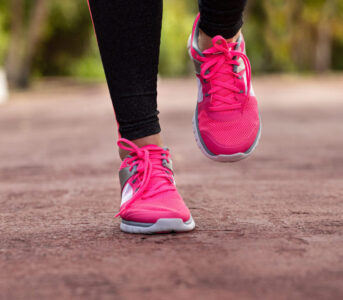
 Modern footwear has come a long way, but a new study suggests that we need to rethink how we create running shoes for women.
According to a study published in the BMJ Open Sport & Exercise Medicine, there may be “a critical gap in design of running footwear,” that doesn’t take expected gender differences into account. Authors note than many running shoes designed for women are simply scaled down versions of a shoe that was designed using a male foot model, and then recolored for eye appeal. In the industry, this process is called “shrink it and pink it.” Authors urged shoe manufacturers to move beyond this outdated process and design shoes with a woman’s specific foot shape in mind.
Testing The Theory
Researchers were curious about whether women wanted more out of their running shoes. For their study, they recruited 21 women to ask them about what they wanted from their running shoes and how their needs might change throughout life. The recruits were between the ages of 20 and 70 and had between six and 58 years of running experience. 11 said they ran for fun (an average of 19 miles per week), and 10 were competitive runners, racking up an average of 28 miles per week.
Most of the women noted that they wanted their shoes to be:
- Wider at the toes
- Narrower at the heel
- More cushioning underfoot
All of these requests are in line with what we already know about normal gender differences between men and women, which is that women generally have a wider forefoot, narrower heel and distinct running biomechanics compared to men. Interestingly, when discussing characteristics that drew a runner to a particular shoe, many women ranked the belief that a specific shoe offered extra injury protection quite high. However, they may not be getting a shoe that helps promote injury prevention if it’s not designed with their unique needs in mind.
“Our findings underscore the importance of moving beyond male-based footwear designs to develop running shoes tailored to women’s anatomical, biomechanical, social and life-stage needs and preferences. These insights are the preliminary step in the co-design of women’s specific running shoe that could positively influence women’s running enjoyment, performance, longevity and injury prevention,” researchers concluded.
So if you’re a woman and you’re looking for a running shoe, do you research on shoes that are designed with your specific foot shape in mind. And while you should always find something that you personally find comfortable and supportive, you may find that a shoe with a wider toe, a narrower heel and additional cushioning could prove more protective of your feet!
For more information about finding the right type of running shoe for you, or for assistance managing a new or existing injury that’s making running more challenging, connect with Dr. Silverman and his team today!