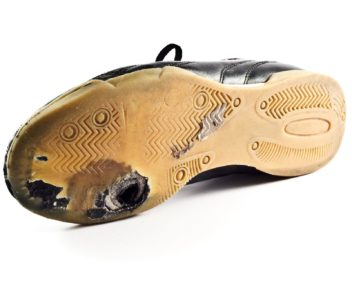
Have you noticed that one of your running shoes seems to wear down faster than the other? If so, you’re not alone. Plenty of people need to buy new shoes because of uneven wear on one shoe, but why is this the case? In today’s blog, we take a closer look at some of the reasons why one shoe may wear down more quickly than the other.
Why One Shoe Wears Down Faster
There are a few different reasons why one running shoe may wear down faster than the other. Let’s take a closer look at the common culprits:
Lingering Injury – One of the most common reasons as to why one shoe may wear down faster than the other is because of a lingering injury. You may not feel like you’re still dealing with the effects of an ankle injury that you suffered years ago or a hamstring tear you suffered in high school, but if you never worked to get back to a pre-injury level of fitness after that injury, one leg may be compensating for this decreased function. This can lead to an abnormal gait and one shoe that bears more stress or hits the ground at a different angle than the other. If you’re dealing with a lingering injury, or you never made a full recovery from a lower body injury when you were younger, consider working to target these areas with physical therapy and other functional exercises, even if they aren’t outwardly painful.
One Leg Weaker Than The Other – Most of us have a dominant arm and foot. We throw with our dominant arm and kick with our dominant leg, and we also do other daily activities with these dominant appendages as well. Perhaps you always go up and down stairs with the same lead leg, or you always drop down to the same knee when performing tasks at your job. One leg may be much stronger than the other, and similar to the point above on injuries, when there is a strength imbalance between two structures that work together, it can increase your risk of injury or unequal tread wear if one foot handles more stress than the other.
Your Running Surface – Another common reason for uneven running shoe wear is tied to the surface where the running is taking place. If you’re exercising on a track and always running in the same direction, it’s likely that your outer shoe will wear down faster. These tracks are designed with an ever so slight inward pitch, and while you likely won’t notice it much while you run, it can leave its mark on your shoes. Consider running on flat ground or running on a track where the direction of travel changes regularly.
Gait/Genetic Abnormalities – Finally, you may find that one shoe wears down quicker than the other because of a gait or genetic abnormality. If your running form is slightly off, one shoe may handle more stress or scrap the ground more regularly than the other, but these gait deficiencies can be corrected with the help of a trainer, a physician or a physical therapist. Genetic issues, like one leg being slightly longer than the other, can be harder to account for, but there are shoe stores that sell running shoes specifically for leg length discrepancy runners, so just make sure that you seek out a shoe designed for your unique situation.
If you want to determine why one of your shoes is wearing down faster than the other, connect with a specialist in your area, and for more information about running-related issues, connect with Dr. Silverman today!